Buy islb.eu ?
We are moving the project
islb.eu .
Are you interested in purchasing the domain
islb.eu ?
domain@kv-gmbh.de · 0541-91531010
Buy islb.eu ?
How does a photodiode work?
A photodiode is a semiconductor device that converts light into an electrical current. When light strikes the photodiode, it generates electron-hole pairs in the semiconductor material. These pairs create a flow of current, which can be measured as a voltage output. The amount of current produced is directly proportional to the intensity of the light hitting the photodiode. This makes photodiodes useful for applications such as light detection, solar cells, and optical communications. **
How is a photodiode connected?
A photodiode is typically connected in reverse bias configuration, meaning the anode is connected to the negative terminal of the power supply and the cathode is connected to the positive terminal. This allows the photodiode to operate in the photoconductive mode, where it generates a current in response to light exposure. Additionally, a resistor is often connected in series with the photodiode to limit the current and prevent damage to the diode. Finally, the output of the photodiode can be connected to a load or measurement circuit to utilize the generated current. **

Similar search terms for Photodiode
Top-Angebote
Products related to Photodiode:
-
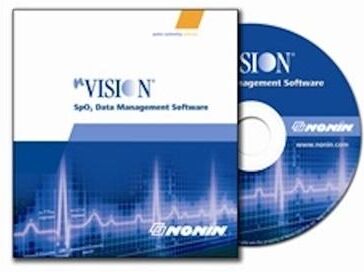
Nonin Medical nVision Data Management Software for Oximetry Screening""" nVision SpO2 Data Management Software Nonin's innovation in pulse oximetry has led to the development of an easy oximetry reporting solution nVISION. Designed to provide effortless viewing, professional analysis, report generation and reliable..."441,00 $*Shipping: 0,00 $Secure redirect to the provider
-
Mac Paw CleanMyMac X - Mac Cleaning and Optimisation Software - Lifetime LicenceCleanMyMac X - Mac Cleaning and Optimisation Software Lifetime Licence Clean, Optimise and Protect Your Mac with CleanMyMac X CleanMyMac X is the best cleaning and optimisation software for Mac, designed to free up disk space, speed up macOS and protect your computer from malware and viruses. Chosen by millions of users worldwide, CleanMyMac X is the professional solution to keep your MacBook, iMac or Mac Mini in perfect condition. Why Choose CleanMyMac X? Deep Cleaning the Mac Remove junk files, system caches, obsolete logs and temporary files that take up valuable disk space. CleanMyMac X can free up tens of gigabytes with a single click, optimising the performance of your Mac. MacOS Performance Optimisation Speed up your Mac by eliminating applications that start automatically, unnecessary background processes and scripts that slow down the system. Ideal for Slow Mac or with performance problems. Antivirus and Antimalware Protection Full scan to detect and remove Mac viruses, adware, spyware and ransomware . Constantly updated database to protect your device from the latest cyber threats. Complete Uninstallation of Applications It completely removes unwanted apps along with all residual files, extensions and hidden preferences that other uninstallation methods leave on the system. Main features of CleanMyMac X ✓ Smart Scan - Automatic scanning that analyses cleanliness, protection and speed ✓ Freeing Disk Space - Finds and removes duplicate files, heavy email attachments and forgotten downloads ✓ Software Update - Keep all your applications up-to-date from a single interface ✓ System Monitoring - Menu bar widget to check CPU, RAM, battery and disk space in real time ✓ MacOS maintenance - Automatic scripts to optimise databases, repair permissions and free RAM ✓ Privacy and Security - Delete browsing history, cookies and digital traces Compatibility and Requirements Operating System macOS 10.13 High Sierra or later Compatible with : MacBook Air, MacBook Pro, iMac, Mac Mini, Mac Studio, Mac Pro Support macOS Sonoma, Ventura, Monterey, Big Sur, Catalina, Mojave Certified and Safe CleanMyMac X is Apple Certified with notarised signatures, guaranteeing maximum security and reliability. Developed by MacPaw, a leading Mac software company since 2008. Buy CleanMyMac X - Lifetime Licence Get the CleanMyMac X lifetime licence to protect and optimise your Mac. Available as a single or multi-device version. Updates included and technical support guaranteed. Keywords : Mac cleaning, macOS optimisation, Mac antivirus, free up Mac space, speed up Mac, Mac maintenance software, clean Mac disk, remove Mac malware77,81 £*Shipping: 0,00 £Secure redirect to the provider



-
What components does a photodiode need in electrical engineering?
In electrical engineering, a photodiode requires several components to function effectively. These include a semiconductor material, such as silicon, which is sensitive to light and capable of generating an electric current when exposed to photons. Additionally, a photodiode needs a p-n junction to create a depletion region, which allows for the separation of electron-hole pairs when light is absorbed. Furthermore, a photodiode typically requires a reverse bias voltage to create the necessary electric field for efficient operation. Finally, a photodiode may also need a protective housing to shield it from external factors such as temperature, humidity, and mechanical stress. **
-
What is the difference between a diode and a photodiode?
A diode is a two-terminal electronic component that allows current to flow in one direction only. It is commonly used in electronic circuits to control the direction of current flow. On the other hand, a photodiode is a type of diode that is designed to convert light into electrical current. Photodiodes are used in various applications such as light sensors, solar cells, and optical communications. The key difference between a diode and a photodiode is that a photodiode is specifically designed to detect and convert light into electrical current, whereas a diode is a more general electronic component used for controlling current flow. **
-
What is the difference between a photoelement and a photodiode?
A photoelement is a general term used to describe any device that converts light into an electrical signal, including photodiodes. A photodiode is a specific type of photoelement that operates in reverse bias, meaning it only allows current to flow when light is present. Photodiodes are commonly used in applications such as light detection, solar cells, and optical communication systems. In contrast, a photoelement can refer to a broader range of light-sensitive devices, including phototransistors, photoresistors, and photovoltaic cells. **
-
What are the different characteristics between a photodiode and a photoresistor?
Photodiodes are semiconductor devices that generate a current when exposed to light, offering a fast response time and high sensitivity to light intensity changes. They are more expensive and complex to use compared to photoresistors. Photoresistors, on the other hand, are passive components that change resistance based on the amount of light they are exposed to, providing a simple and cost-effective solution for light detection. They have a slower response time and are less sensitive to light compared to photodiodes. **


How can the light sensor (photodiode) be read out analog-digital?
The light sensor (photodiode) can be read out analog-digital by using an analog-to-digital converter (ADC). The photodiode generates a current or voltage signal in response to the incident light, which is then converted into a digital value by the ADC. The ADC samples the analog signal at regular intervals and quantizes it into discrete digital values, which can then be processed and analyzed by a microcontroller or computer. This digital output can be used to measure the intensity of the light and make decisions or trigger actions based on the light level. **
What is the difference between a photodiode, a phototransistor, and a photoresistor?
A photodiode is a semiconductor device that converts light into an electrical current. It operates in reverse bias mode and has a fast response time. A phototransistor is a type of transistor that is sensitive to light and amplifies the current flowing through it when exposed to light. It operates in active mode and is more sensitive than a photodiode. A photoresistor, on the other hand, is a passive component whose resistance changes in response to light intensity. It does not amplify the current like a phototransistor and is commonly used in light sensing applications. **
Top-Angebote
Products related to Photodiode:
-
All Categories Goods LED Solar Security Light Dual Motion Sensor Outdoor Floodlight With LED Technology For Energy Efficient Illumination LED Solar Security Light Dual Motion Sensor Outdoor Floodlight With LED Technology For Energy Efficient IlluminationBrighten your outdoor space with the 1 pcs of 22 LED Solar Security Light, designed for maximum visibility and security. Powered by ecofriendly solar energy, this motion sensor floodlight activates when movement is detected, offering both...63,97 $*Shipping: 0,00 $Secure redirect to the provider
-
Nonin Medical nVision Data Management Software for Oximetry Screening""" nVision SpO2 Data Management Software Nonin's innovation in pulse oximetry has led to the development of an easy oximetry reporting solution nVISION. Designed to provide effortless viewing, professional analysis, report generation and reliable..."441,00 $*Shipping: 0,00 $Secure redirect to the provider
-
How does a photodiode work?
A photodiode is a semiconductor device that converts light into an electrical current. When light strikes the photodiode, it generates electron-hole pairs in the semiconductor material. These pairs create a flow of current, which can be measured as a voltage output. The amount of current produced is directly proportional to the intensity of the light hitting the photodiode. This makes photodiodes useful for applications such as light detection, solar cells, and optical communications. **
-
How is a photodiode connected?
A photodiode is typically connected in reverse bias configuration, meaning the anode is connected to the negative terminal of the power supply and the cathode is connected to the positive terminal. This allows the photodiode to operate in the photoconductive mode, where it generates a current in response to light exposure. Additionally, a resistor is often connected in series with the photodiode to limit the current and prevent damage to the diode. Finally, the output of the photodiode can be connected to a load or measurement circuit to utilize the generated current. **
-
What components does a photodiode need in electrical engineering?
In electrical engineering, a photodiode requires several components to function effectively. These include a semiconductor material, such as silicon, which is sensitive to light and capable of generating an electric current when exposed to photons. Additionally, a photodiode needs a p-n junction to create a depletion region, which allows for the separation of electron-hole pairs when light is absorbed. Furthermore, a photodiode typically requires a reverse bias voltage to create the necessary electric field for efficient operation. Finally, a photodiode may also need a protective housing to shield it from external factors such as temperature, humidity, and mechanical stress. **
-
What is the difference between a diode and a photodiode?
A diode is a two-terminal electronic component that allows current to flow in one direction only. It is commonly used in electronic circuits to control the direction of current flow. On the other hand, a photodiode is a type of diode that is designed to convert light into electrical current. Photodiodes are used in various applications such as light sensors, solar cells, and optical communications. The key difference between a diode and a photodiode is that a photodiode is specifically designed to detect and convert light into electrical current, whereas a diode is a more general electronic component used for controlling current flow. **
Similar search terms for Photodiode
-
Mac Paw CleanMyMac X - Mac Cleaning and Optimisation Software - Lifetime LicenceCleanMyMac X - Mac Cleaning and Optimisation Software Lifetime Licence Clean, Optimise and Protect Your Mac with CleanMyMac X CleanMyMac X is the best cleaning and optimisation software for Mac, designed to free up disk space, speed up macOS and protect your computer from malware and viruses. Chosen by millions of users worldwide, CleanMyMac X is the professional solution to keep your MacBook, iMac or Mac Mini in perfect condition. Why Choose CleanMyMac X? Deep Cleaning the Mac Remove junk files, system caches, obsolete logs and temporary files that take up valuable disk space. CleanMyMac X can free up tens of gigabytes with a single click, optimising the performance of your Mac. MacOS Performance Optimisation Speed up your Mac by eliminating applications that start automatically, unnecessary background processes and scripts that slow down the system. Ideal for Slow Mac or with performance problems. Antivirus and Antimalware Protection Full scan to detect and remove Mac viruses, adware, spyware and ransomware . Constantly updated database to protect your device from the latest cyber threats. Complete Uninstallation of Applications It completely removes unwanted apps along with all residual files, extensions and hidden preferences that other uninstallation methods leave on the system. Main features of CleanMyMac X ✓ Smart Scan - Automatic scanning that analyses cleanliness, protection and speed ✓ Freeing Disk Space - Finds and removes duplicate files, heavy email attachments and forgotten downloads ✓ Software Update - Keep all your applications up-to-date from a single interface ✓ System Monitoring - Menu bar widget to check CPU, RAM, battery and disk space in real time ✓ MacOS maintenance - Automatic scripts to optimise databases, repair permissions and free RAM ✓ Privacy and Security - Delete browsing history, cookies and digital traces Compatibility and Requirements Operating System macOS 10.13 High Sierra or later Compatible with : MacBook Air, MacBook Pro, iMac, Mac Mini, Mac Studio, Mac Pro Support macOS Sonoma, Ventura, Monterey, Big Sur, Catalina, Mojave Certified and Safe CleanMyMac X is Apple Certified with notarised signatures, guaranteeing maximum security and reliability. Developed by MacPaw, a leading Mac software company since 2008. Buy CleanMyMac X - Lifetime Licence Get the CleanMyMac X lifetime licence to protect and optimise your Mac. Available as a single or multi-device version. Updates included and technical support guaranteed. Keywords : Mac cleaning, macOS optimisation, Mac antivirus, free up Mac space, speed up Mac, Mac maintenance software, clean Mac disk, remove Mac malware77,81 £*Shipping: 0,00 £Secure redirect to the provider
-
HARPERCOLLINS Creative Confidence by Tom & David Kelley – Unleashing Your Creative Potential & Innovation MindsetA powerful and inspiring book from the founders of IDEO, the award-winning design firm, on unleashing the creativity that lies within each and every one of us. Too often, companies and individuals assume that creativity and innovation are the domain of the ‘creative types’. But two of the foremost experts in innovation, design and creativity on the planet show us that each and every one of us is creative. In an entertaining and inspiring narrative that draws on countless stories from their work at IDEO, and with many of the world's top companies and design firms, David and Tom Kelley identify the principles and strategies that will allow us to tap into our creative potential in our work lives, and in our personal lives, allow us to think outside the box in terms of how we approach and solve problems. ‘Creative Confidence’ is a book that will help each of us be more productive and successful in our lives and in our careers.4,95 £*Shipping: 1,99 £Secure redirect to the provider
-
What is the difference between a photoelement and a photodiode?
A photoelement is a general term used to describe any device that converts light into an electrical signal, including photodiodes. A photodiode is a specific type of photoelement that operates in reverse bias, meaning it only allows current to flow when light is present. Photodiodes are commonly used in applications such as light detection, solar cells, and optical communication systems. In contrast, a photoelement can refer to a broader range of light-sensitive devices, including phototransistors, photoresistors, and photovoltaic cells. **
-
What are the different characteristics between a photodiode and a photoresistor?
Photodiodes are semiconductor devices that generate a current when exposed to light, offering a fast response time and high sensitivity to light intensity changes. They are more expensive and complex to use compared to photoresistors. Photoresistors, on the other hand, are passive components that change resistance based on the amount of light they are exposed to, providing a simple and cost-effective solution for light detection. They have a slower response time and are less sensitive to light compared to photodiodes. **
-
How can the light sensor (photodiode) be read out analog-digital?
The light sensor (photodiode) can be read out analog-digital by using an analog-to-digital converter (ADC). The photodiode generates a current or voltage signal in response to the incident light, which is then converted into a digital value by the ADC. The ADC samples the analog signal at regular intervals and quantizes it into discrete digital values, which can then be processed and analyzed by a microcontroller or computer. This digital output can be used to measure the intensity of the light and make decisions or trigger actions based on the light level. **
-
What is the difference between a photodiode, a phototransistor, and a photoresistor?
A photodiode is a semiconductor device that converts light into an electrical current. It operates in reverse bias mode and has a fast response time. A phototransistor is a type of transistor that is sensitive to light and amplifies the current flowing through it when exposed to light. It operates in active mode and is more sensitive than a photodiode. A photoresistor, on the other hand, is a passive component whose resistance changes in response to light intensity. It does not amplify the current like a phototransistor and is commonly used in light sensing applications. **
* All prices are inclusive of VAT and, if applicable, plus shipping costs. The offer information is based on the details provided by the respective shop and is updated through automated processes. Real-time updates do not occur, so deviations can occur in individual cases. ** Note: Parts of this content were created by AI.